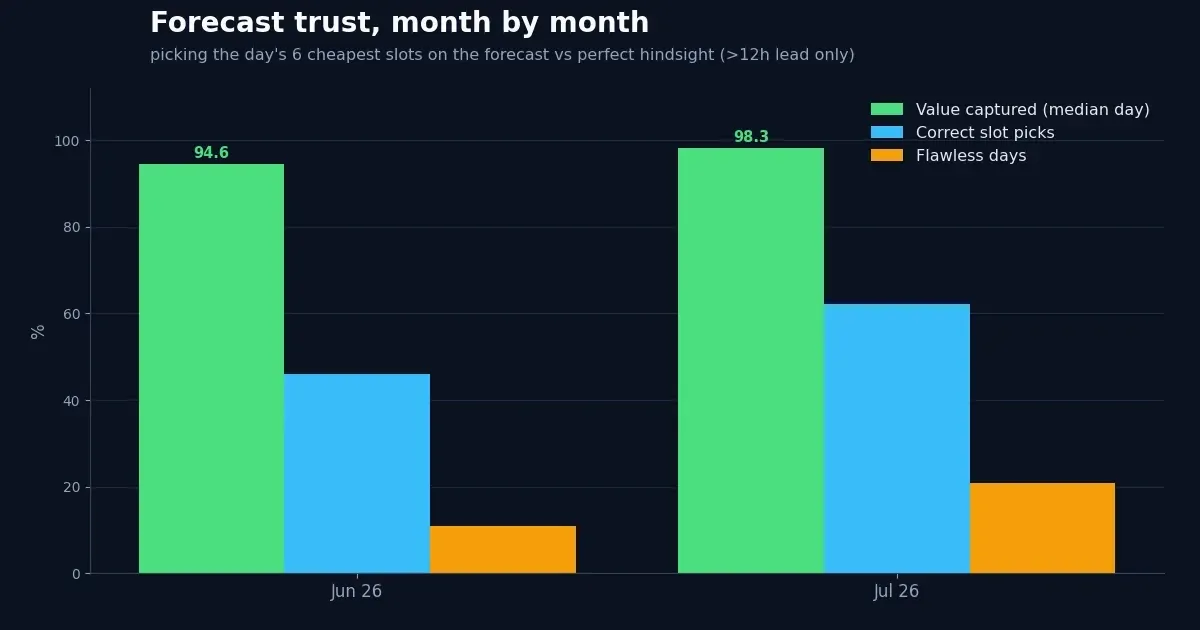
Should I Trust My Price Forecast? I Measured It
As a price oracle: ~41% trustworthy. As a slot-picking map: 97.4% of perfect. My planner only uses it as the second thing — measured over 26,552 predictions.
 elyob
elyob
Self-hosted solar + battery ROI tracker, motorbike trip writeups with GPS routes, and notes on building it all with Claude Code.
As a price oracle: ~41% trustworthy. As a slot-picking map: 97.4% of perfect. My planner only uses it as the second thing — measured over 26,552 predictions.
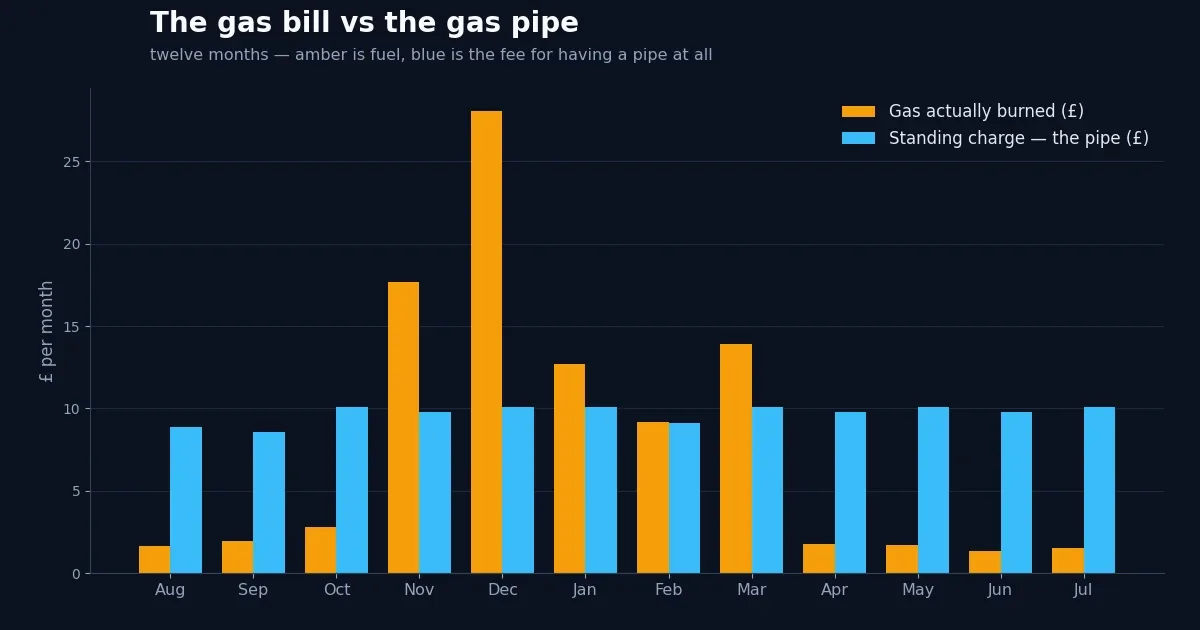
£1.52 of gas, £10.12 for the pipe it came through — and across a full year, winter included, the pipe still wins.
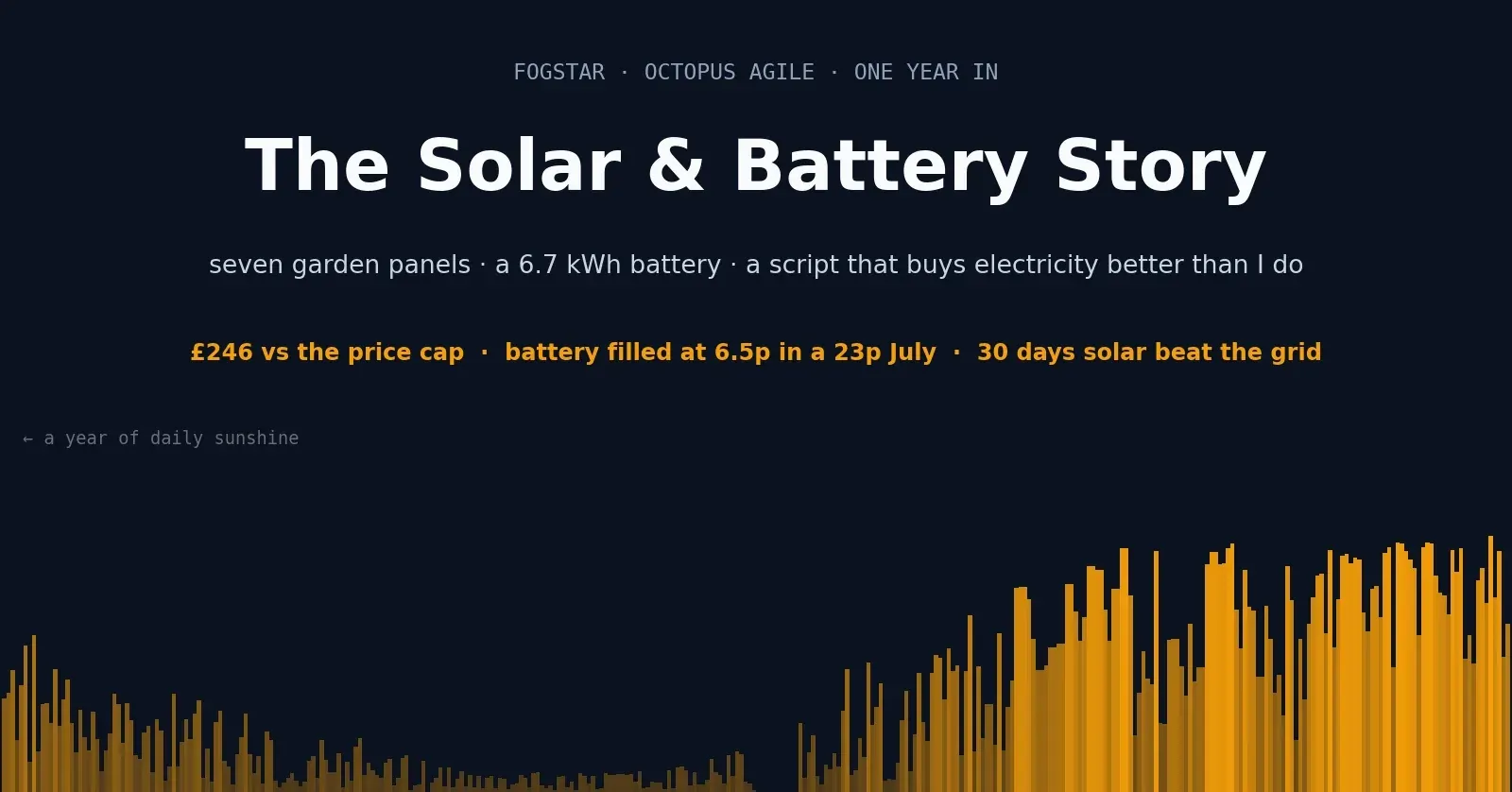
A battery, seven garden panels and a half-hourly tariff — the whole story, mapped: the build, the brain, the money, the scoreboards.
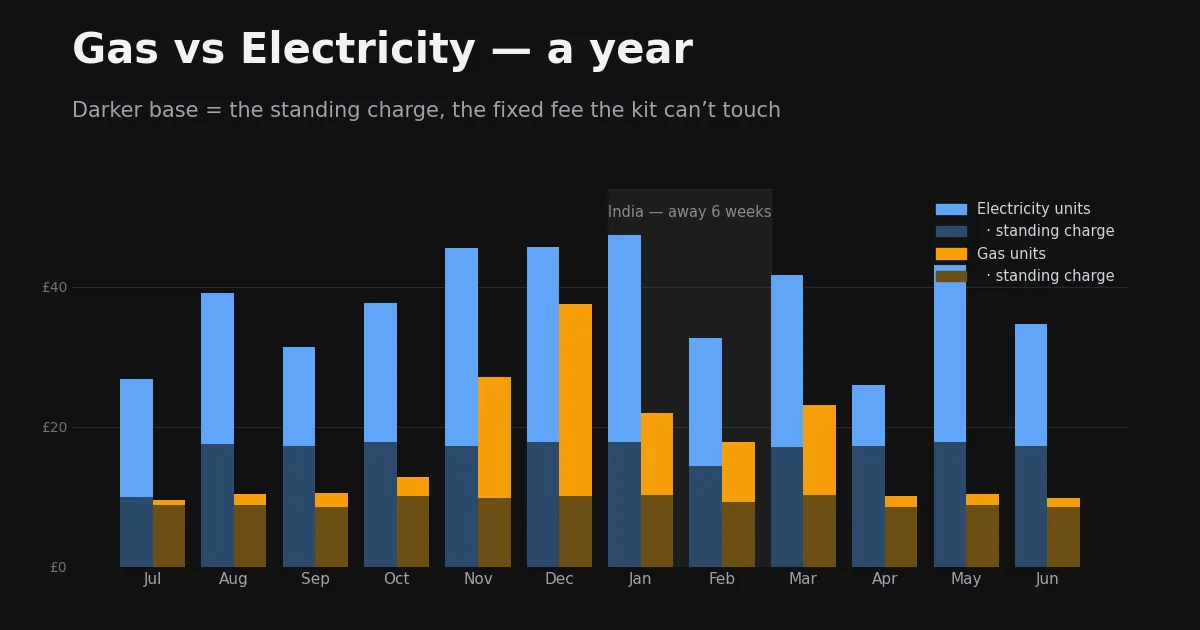
Electricity and gas behave nothing like each other over a year — one flat, one seasonal. And six weeks away turned the flat into an accidental experiment in what's heating and what's always-on.
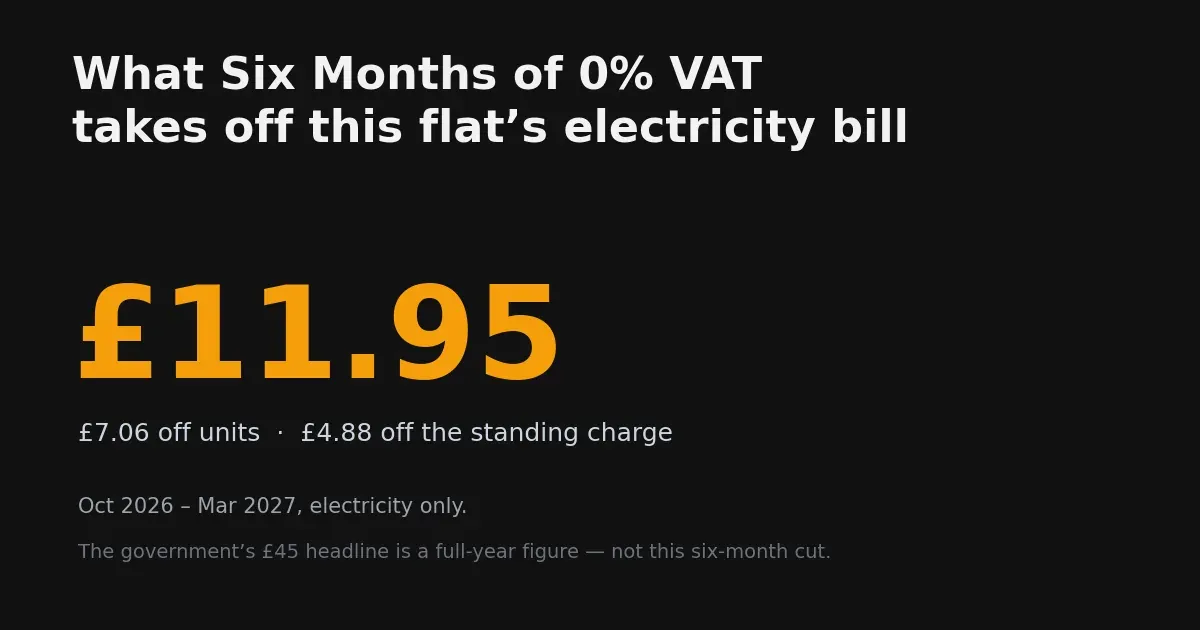
The government's taking VAT off electricity for six months. Measured against my actual bills, it would have saved me about £12 — a number with a story behind it.
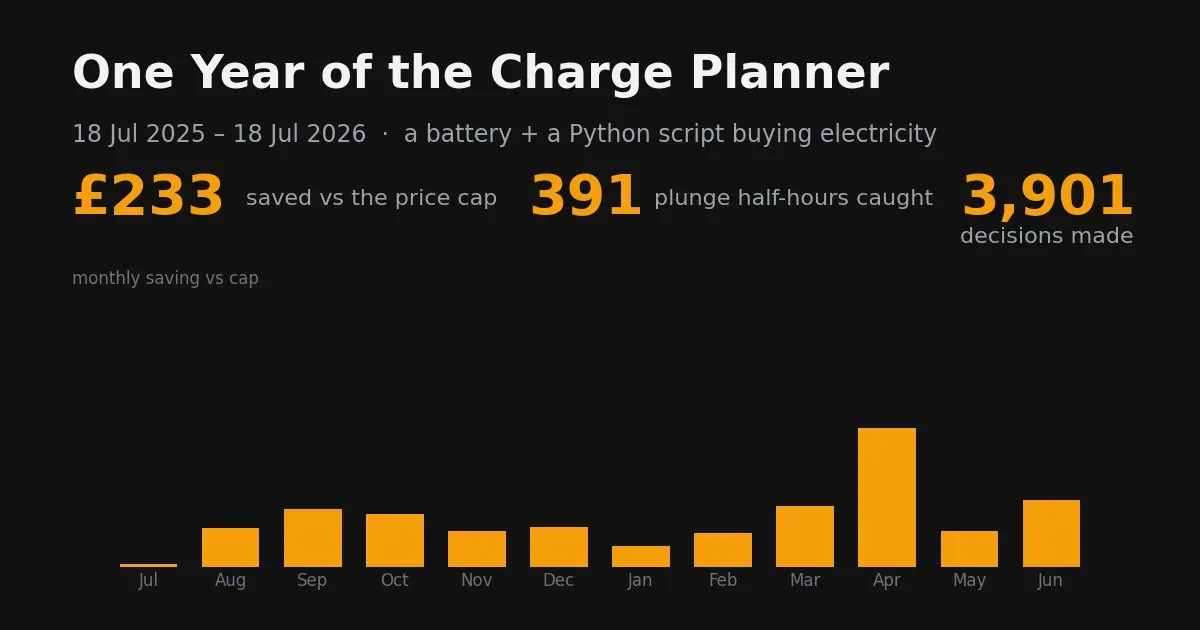
A year ago I put in a home battery and started timing my electricity buying — by hand at first, then a Python script I built. What the year added up to.
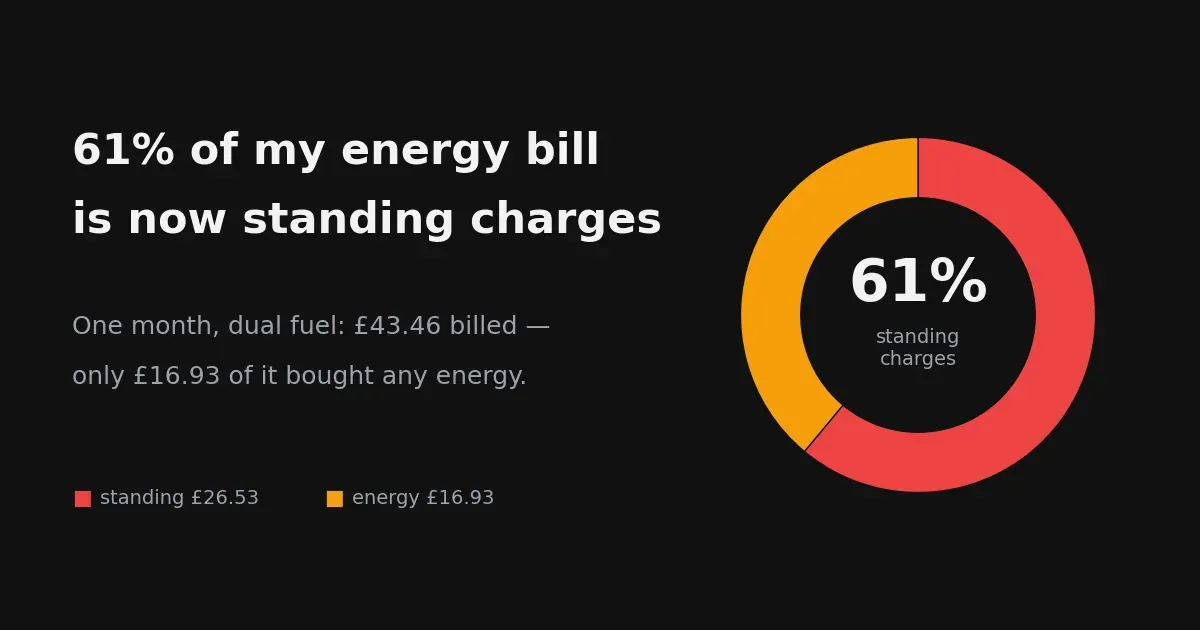
The charge planner squeezed a month of energy down to £16.93 — so the fixed daily fees are now the bill.
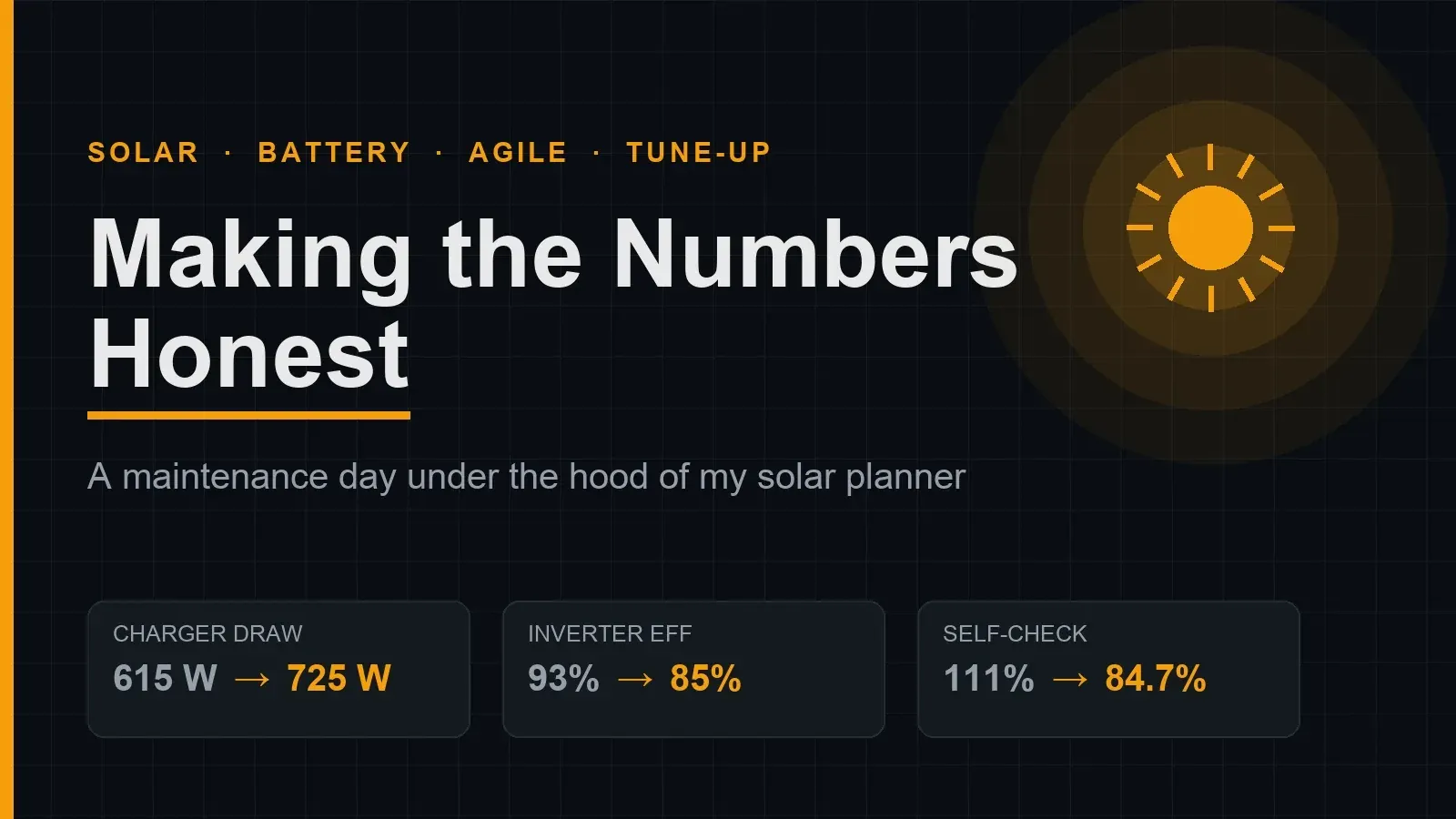
A Cloudflare 502 sent me to fix one thing. By the end of the night I'd found three more — numbers that had been quietly wrong for weeks.
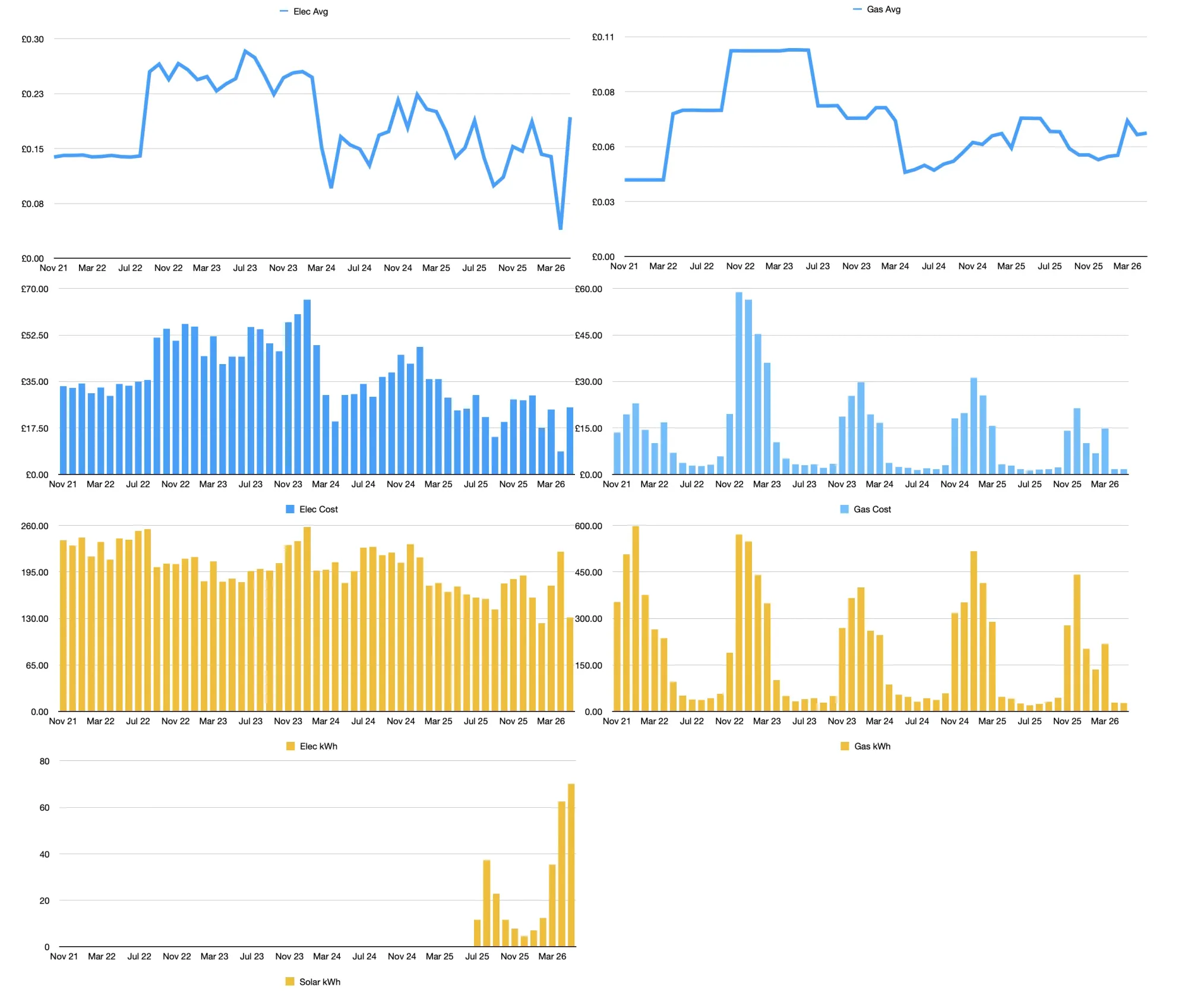
Five years of monthly electricity and gas bills laid out side by side: pre-war calm, the Ukraine spike, the partial rebound, and what installing solar + battery + Octopus Agile did to the line ever since.
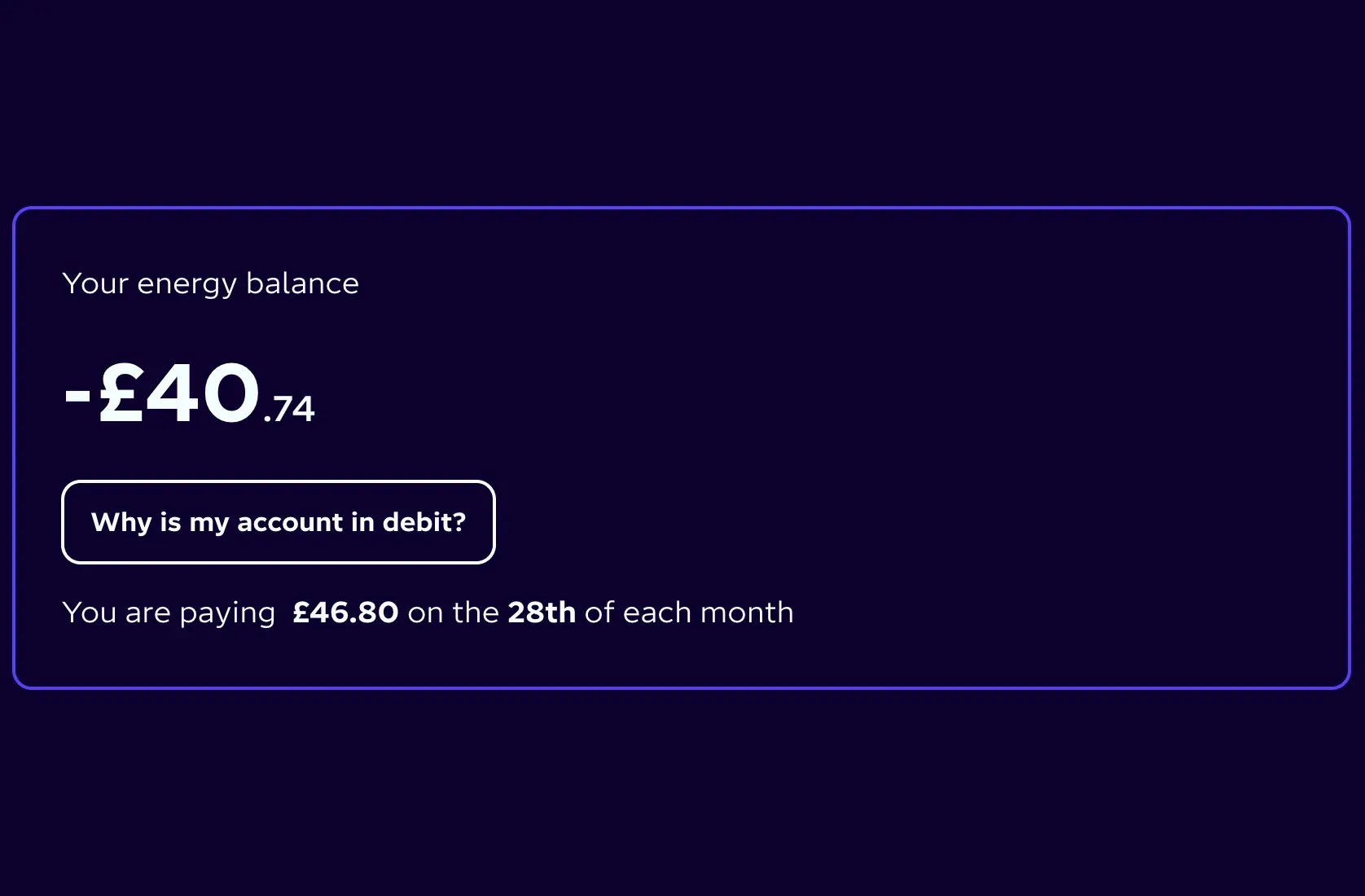
Octopus wanted to double my direct debit. My own bills — and the slice the battery and Agile actually control — say otherwise.

Most home batteries charge whenever the rate is cheap. Mine compares this cycle's cheapest slot against the next cycle's, the projected drain, the SOC-aware ceiling, and a forecast of tomorrow's solar — every 30 minutes.
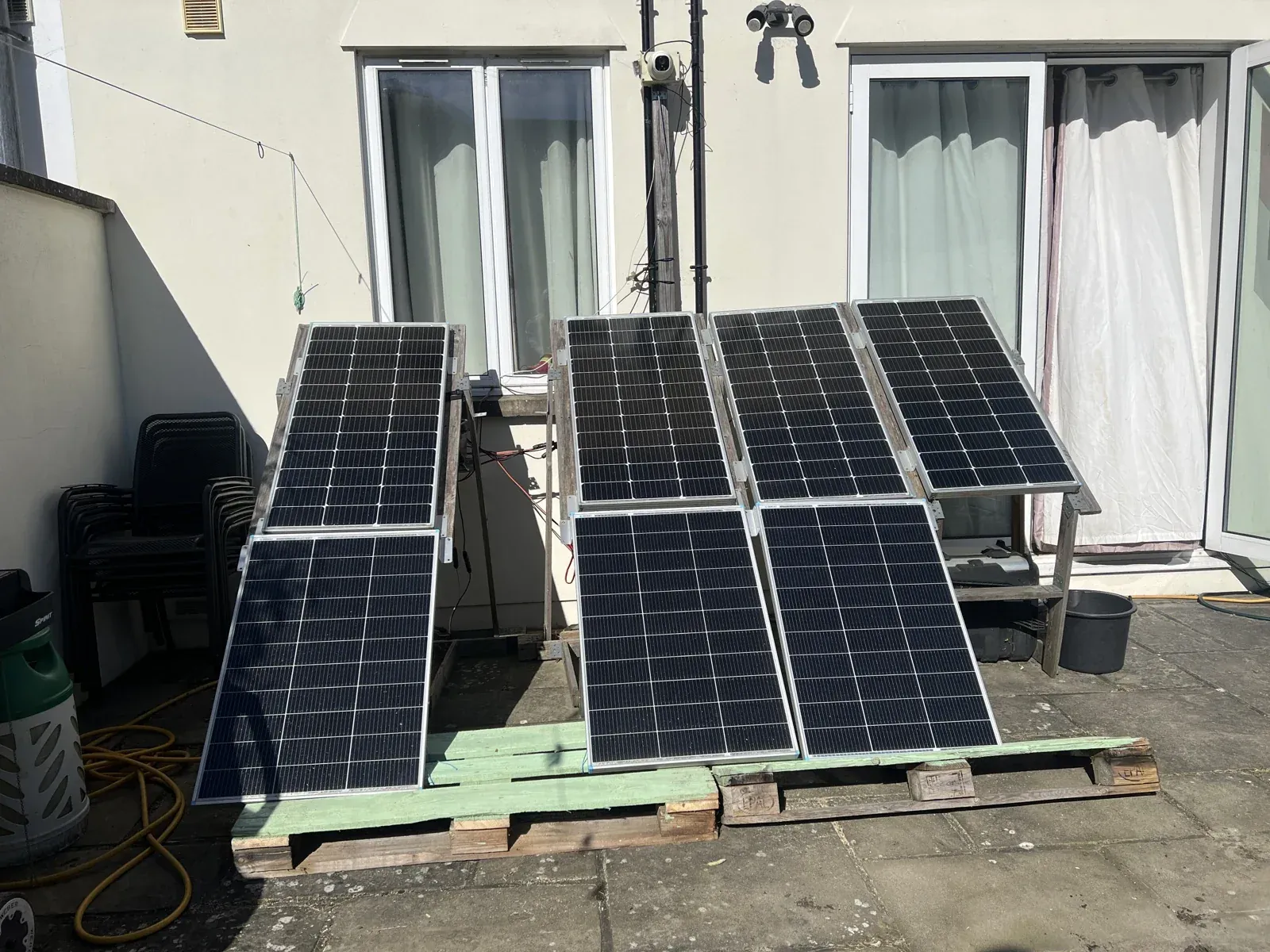
A £63 upgrade — one extra 100W mono panel — bumps the garden array from 600W to 700W and should pay for itself by autumn.

Live ROI tracker for my solar + battery setup: actual Agile spend vs what the Ofgem price cap would have cost, updated every 2 hours.
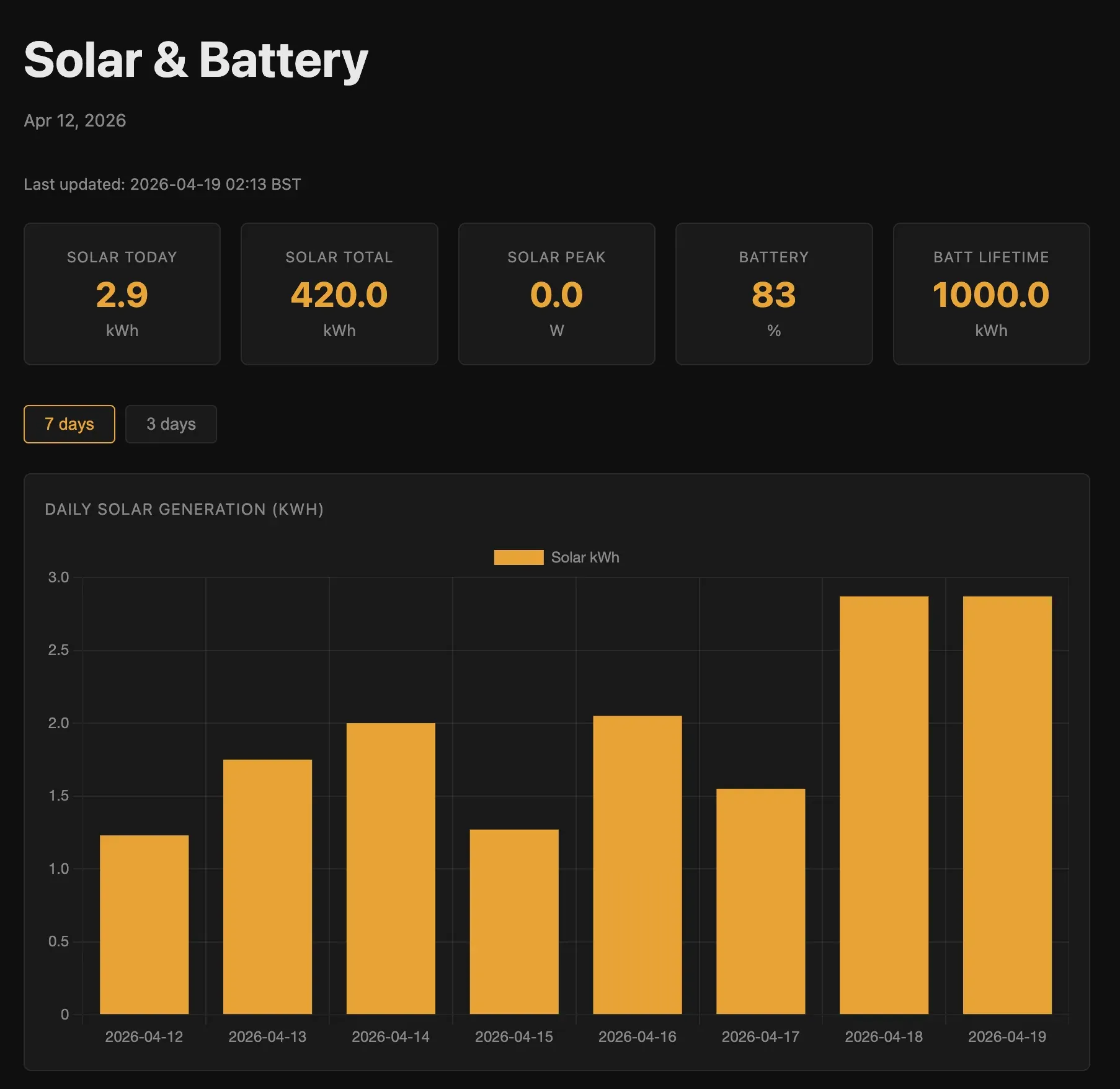
The Fogstar Drift battery just hit 1,000 kWh of lifetime throughput — and 420 kWh of that came straight from the solar panels.
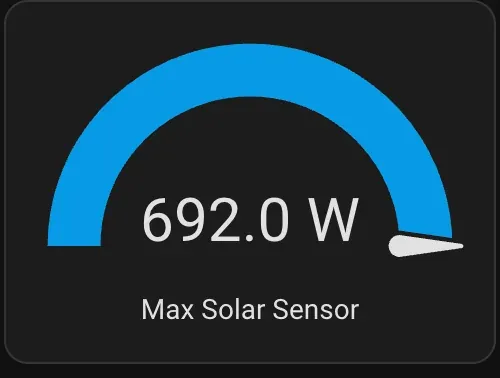
My 600W solar panels hit 692W. Here's how irradiance, temperature and panel physics make that not just possible, but expected.
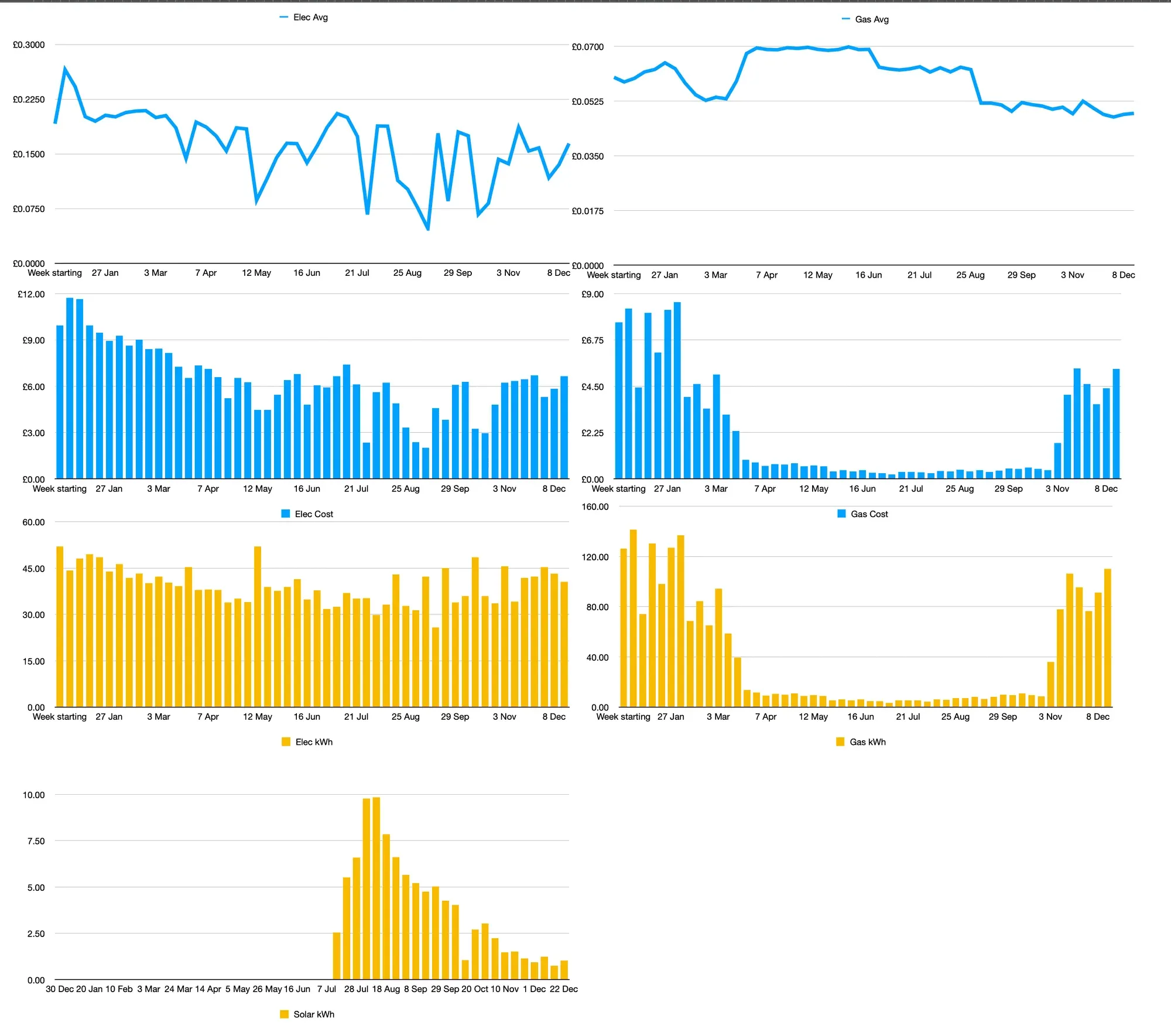
Discover how solar power transformed energy independence in just 6 months. Explore real data, battery tech, and dramatic electricity bill savings.
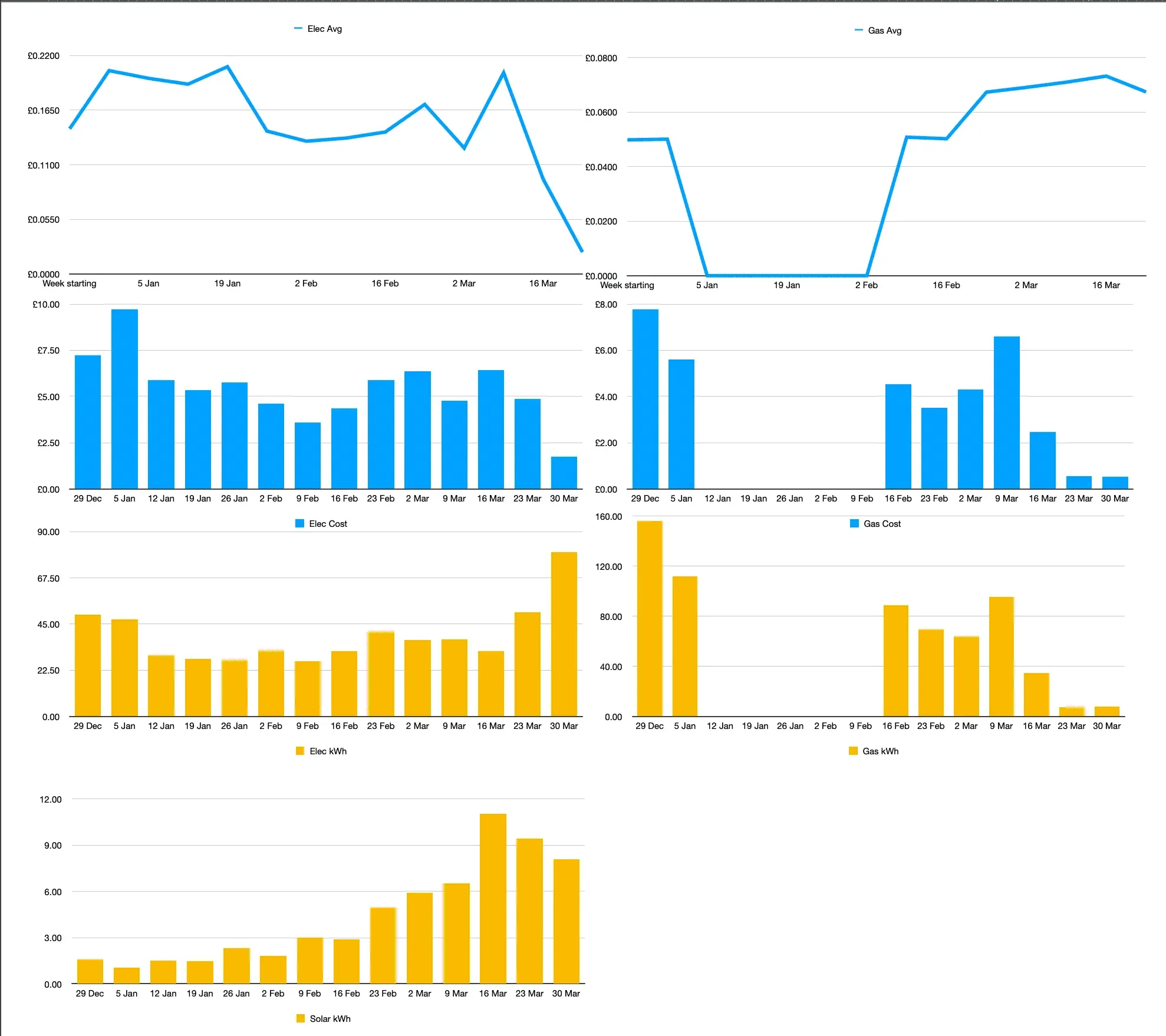
Discover how a Q1 2026 energy experiment revealed unexpected savings with solar power and smart meter monitoring. Real data, real results.