 elyob
elyob
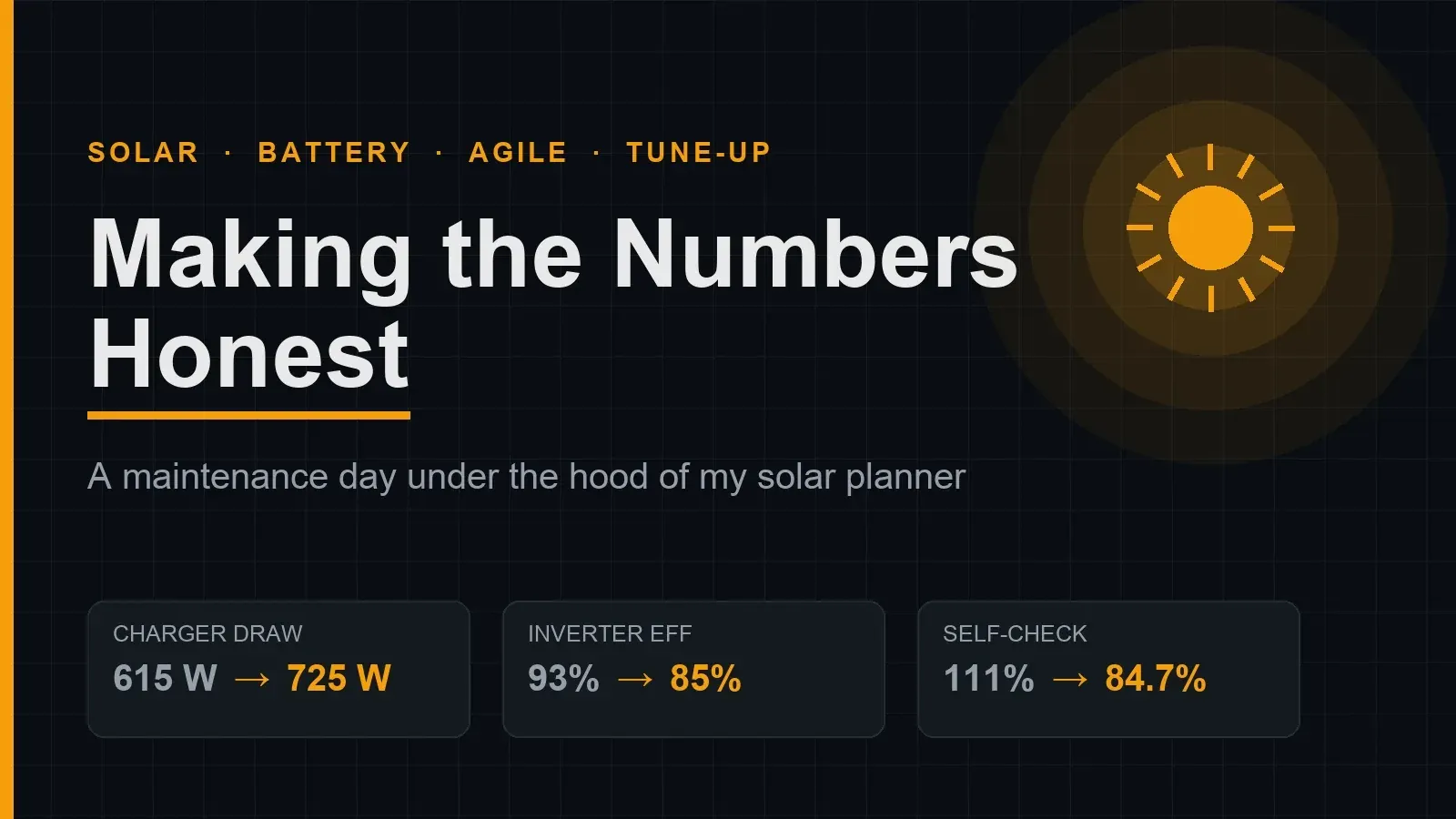
My blog threw a Cloudflare 502 one evening. I went to fix that. By the end of the night I'd found three more things wrong — none of which would ever have announced themselves.
- The 502 wasn't the blog. My GPS tracker's background jobs were pinning the home server and starving the Cloudflare tunnel. That was the urgent one — throttled it.
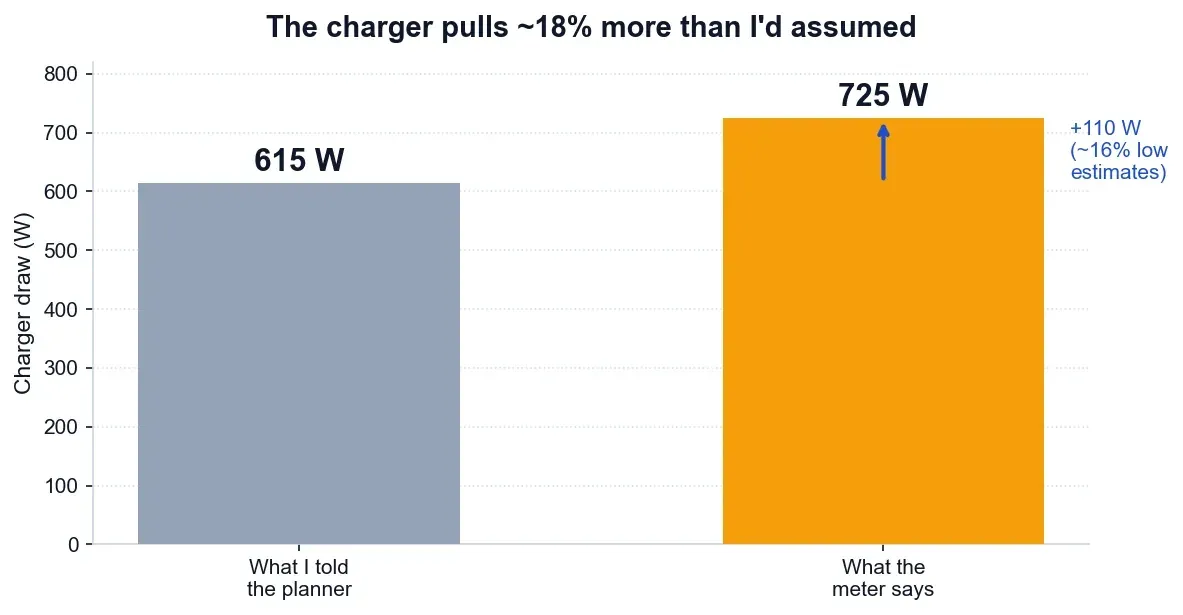
- The planner thought the charger drew 615 W. It pulls about 725, so its cost estimates ran ~16% low.
- Three different efficiency numbers were scattered across the code. I measured the real ones and collapsed them to one.
- A monthly self-check was silently broken — reporting an impossible 111%. Now it works.
- The "saved so far" headline didn't move a penny. It never leaned on any of this.
It started with the blog falling over
The error pointed at Ghost, but Ghost was fine. Two rooms away, the little server that also runs my GPS tracker had a background job stuck in a loop, chewing every core for hours — which starved the Cloudflare tunnel sharing the box. I capped the job, handed back some memory, and the load dropped from on-fire to idle. The blog steadied at once.
With the fire out, I did the thing I always mean to do after an incident and never quite get to: actually check the numbers the system runs on. That's where the night turned.
The charger draws more than I'd told it
The planner tops the battery up from cheap Agile slots, so it needs to know how fast the charger pulls. I'd written down 615 W. The meter says about 725 — so every cost estimate had been running roughly 16% light. It now reads the measured figure.
And if I'd guessed the charger's draw, what else had I assumed instead of measured?
Reconciling the efficiency numbers
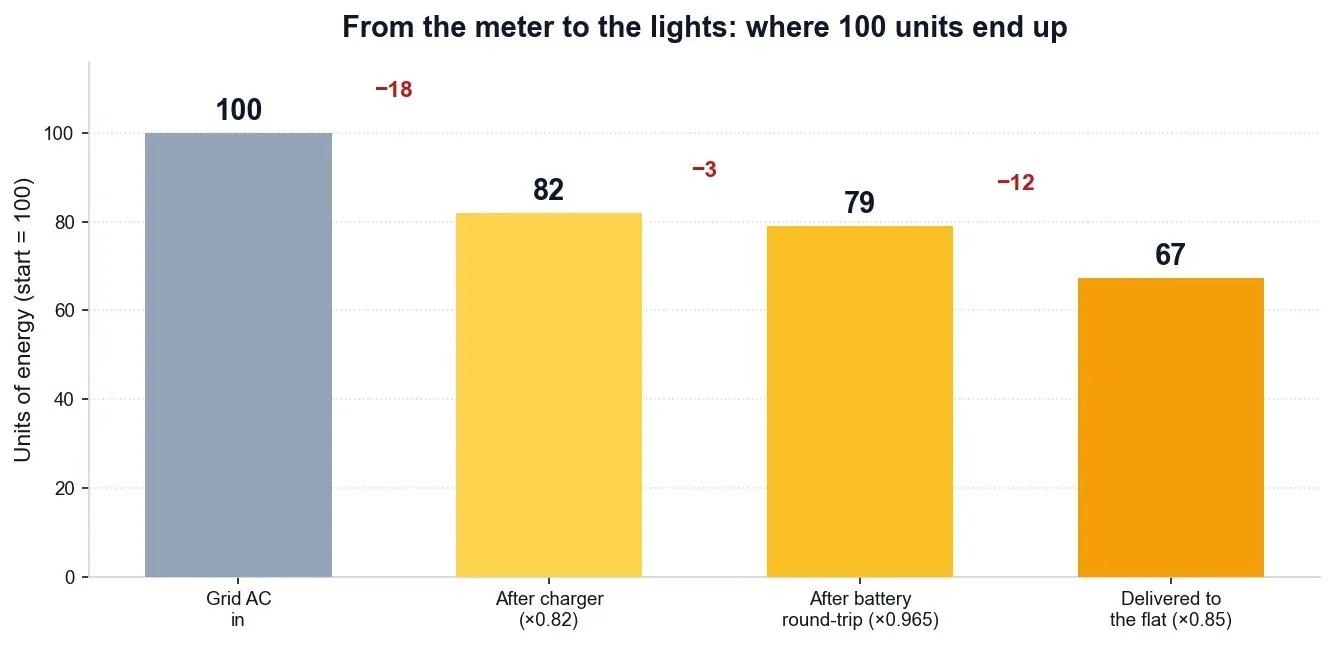
Grid power gets converted twice before it runs the flat: AC into DC at the charger, then DC back to AC at the inverter that feeds my microgrid — the lights, the TV, the computers. The battery sits in the middle, but not always. While the charger's running it supplies that microgrid directly off the shared bus, so a lot of the grid power I pull is running the flat live, not being stored first.
I had guesses for both conversions — and the same figure written three different ways in three files. So I measured them. The charging step landed where the planner already assumed (~82%). The inverter was the surprise: I'd assumed 93%, but at the gentle loads my flat draws, it runs nearer 85%. All three now live in one place, measured rather than guessed.
One thing still nagged. I have a monthly job meant to catch exactly this kind of drift. Why hadn't it?
A self-check that was lying to me
Because it was quietly broken. It compared total AC out against battery DC out — but the inverter also runs straight off solar on the shared bus, so the ratio came out over 100%, which is impossible, and it never said anything useful. Now it only weighs the hours when the battery is the sole source. It reads a sane 85%, and will actually flag a real problem if one ever shows up.
What didn't change
The number I care about — what the setup has saved against the price cap — didn't budge. It's built from metered bills, not these assumptions, so I checked before and after and it sat at exactly the same figure.
I went in to fix a website. I came out having corrected a charger reading, two efficiencies and a broken watchdog — and confirmed the one number that matters was right all along. The fault that trips the alarm is rarely the only one in the room; it's just the only one loud enough to make me look.