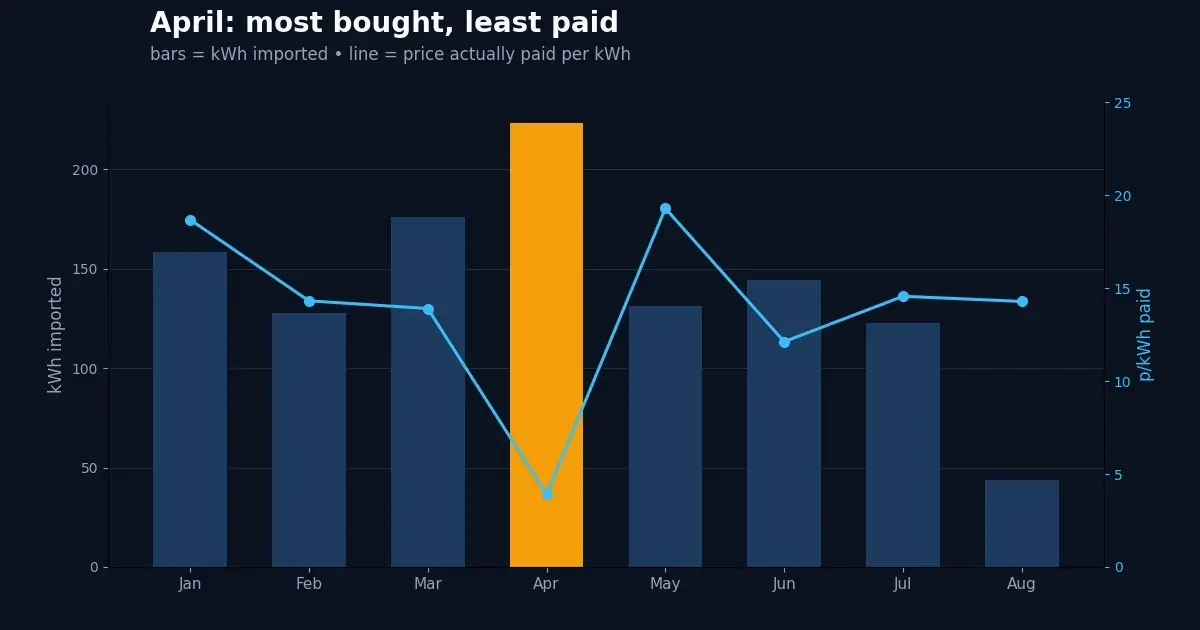
The Month the Grid Paid Me to Fill the Battery
April 2026: 142 negative half-hours, 223 kWh imported at 3.91p — the most electricity I bought all year, and the least I paid for it.
 elyob
elyob
Self-hosted solar + battery ROI tracker, motorbike trip writeups with GPS routes, and notes on building it all with Claude Code.
April 2026: 142 negative half-hours, 223 kWh imported at 3.91p — the most electricity I bought all year, and the least I paid for it.
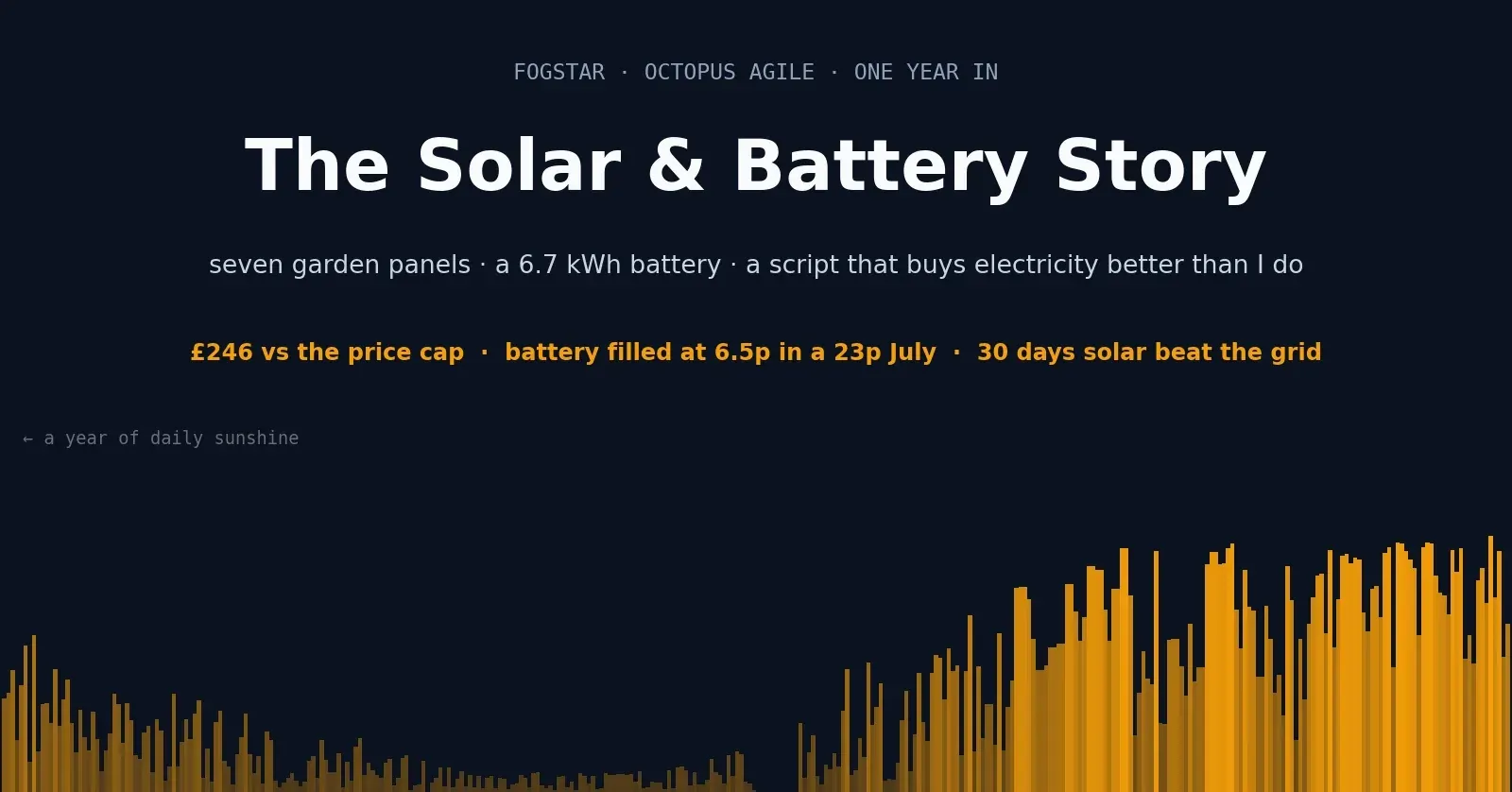
A battery, seven garden panels and a half-hourly tariff — the whole story, mapped: the build, the brain, the money, the scoreboards.
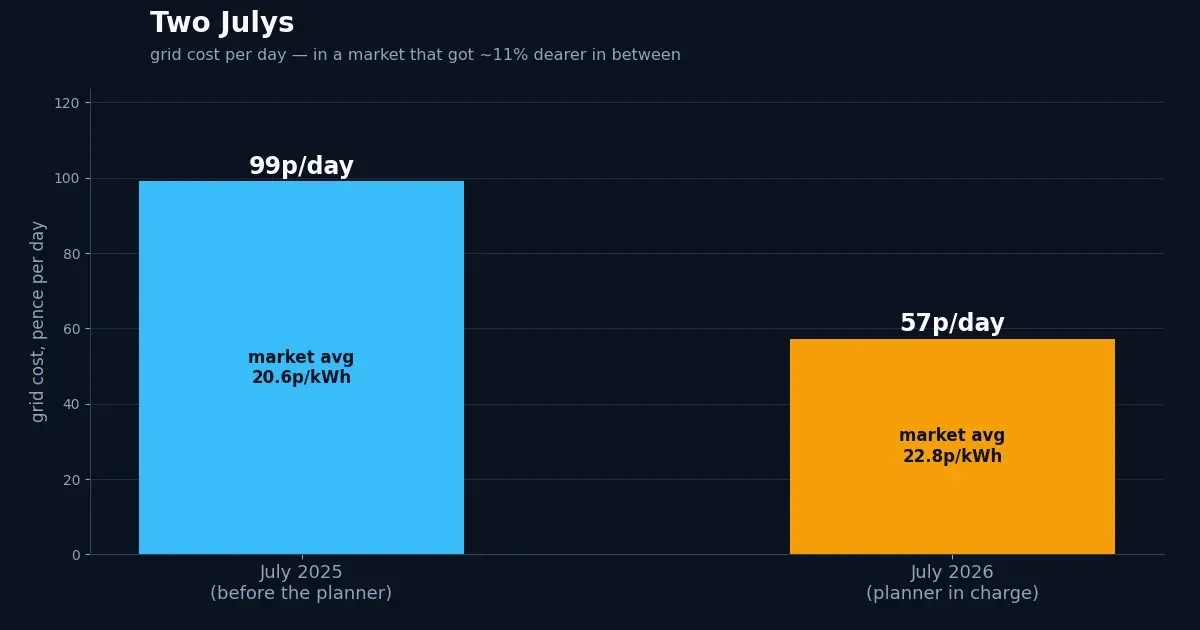
One-word answer, then the evidence: a 43% cheaper July in an 11% dearer market, a battery filling at 6.5p, and a paper trail that proves it.
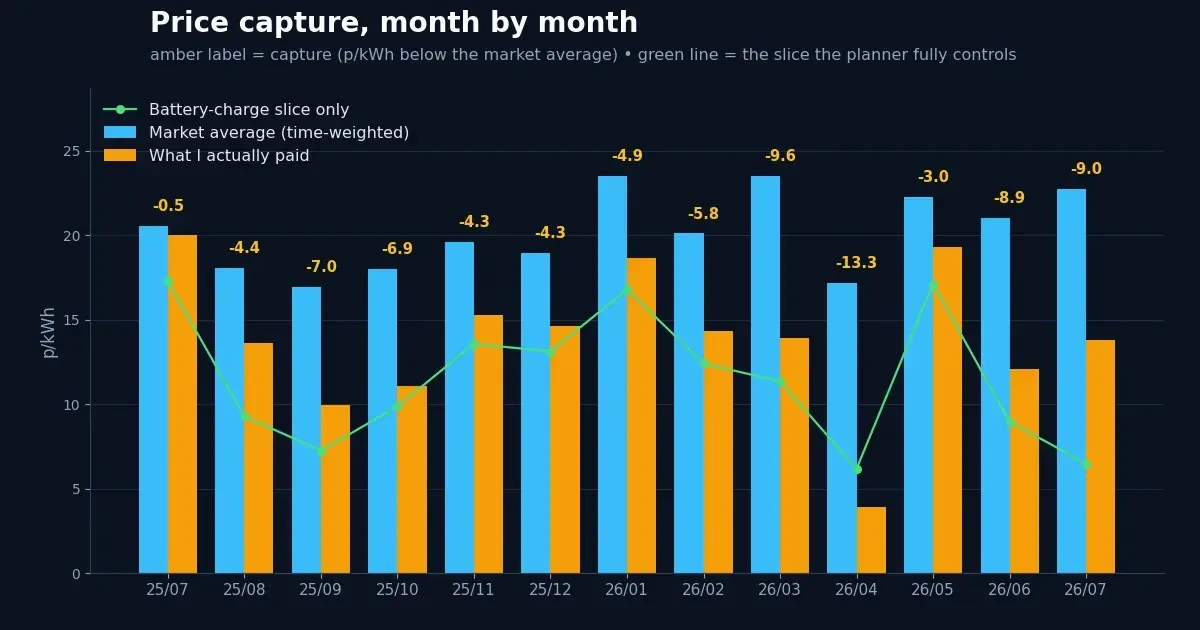
A dearer market, a cheaper bill. One number — achieved price minus market average — isolates the charge planner's skill from weather, solar and luck.
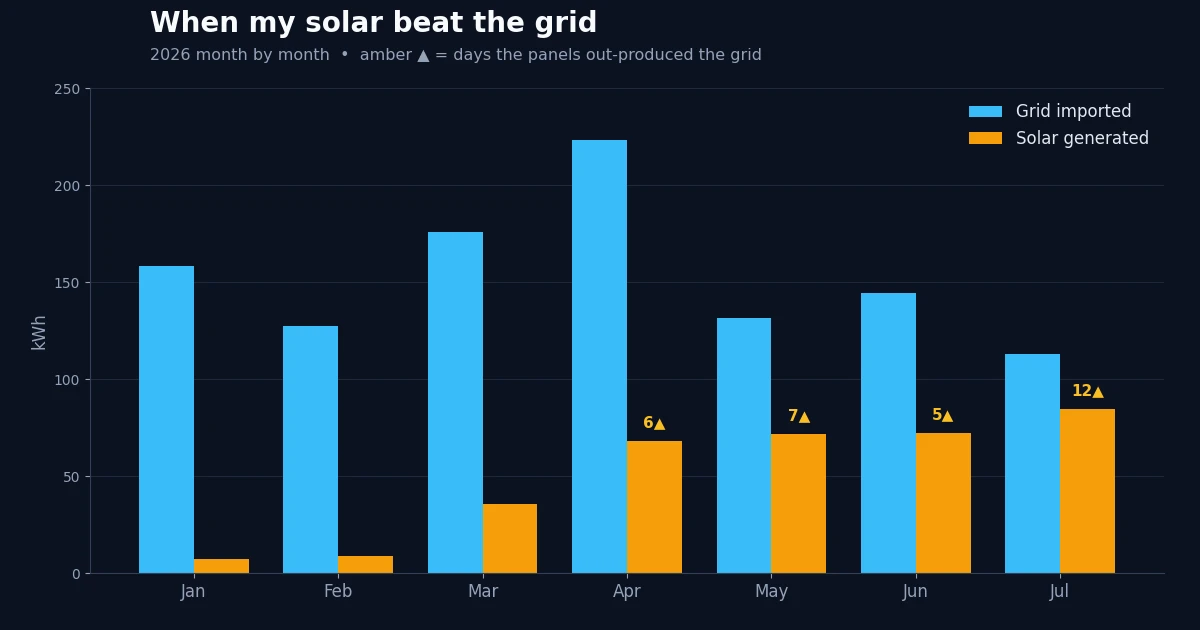
106 days in this year my ground-level garden panels beat the grid outright. The month-by-month breakdown.
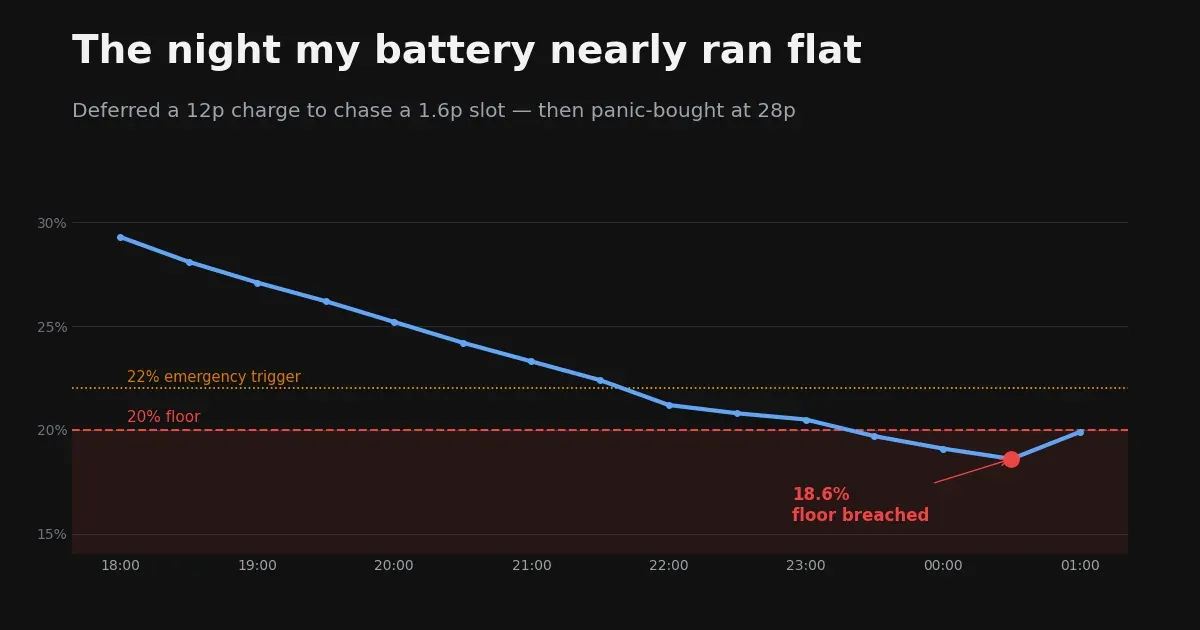
A week ago I said my battery had never breached its floor. Last night it did — not because the safety net failed to fire, but because a second safety system was running month-old code and kept turning the charger back off. Two backstops at war, and a human at 2am.
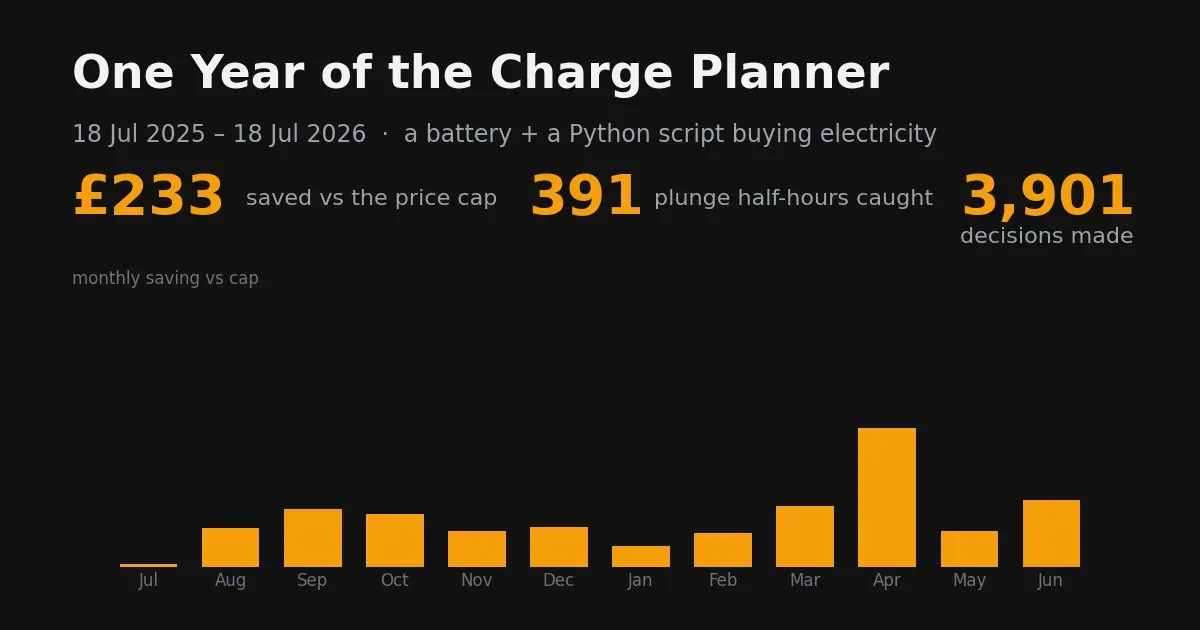
A year ago I put in a home battery and started timing my electricity buying — by hand at first, then a Python script I built. What the year added up to.
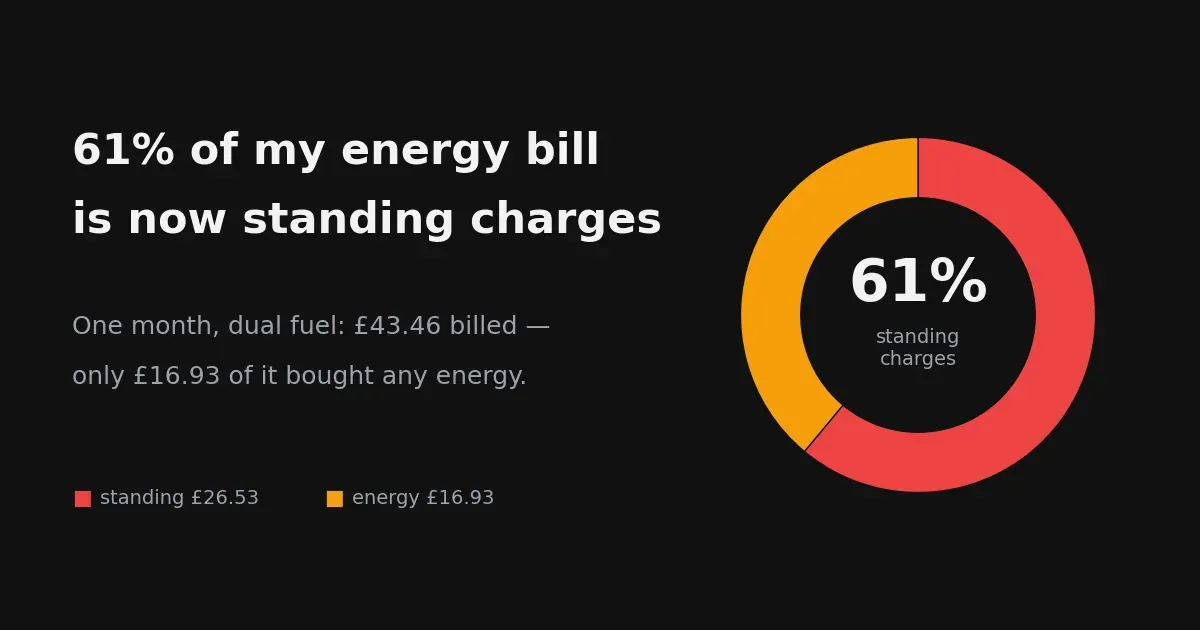
The charge planner squeezed a month of energy down to £16.93 — so the fixed daily fees are now the bill.
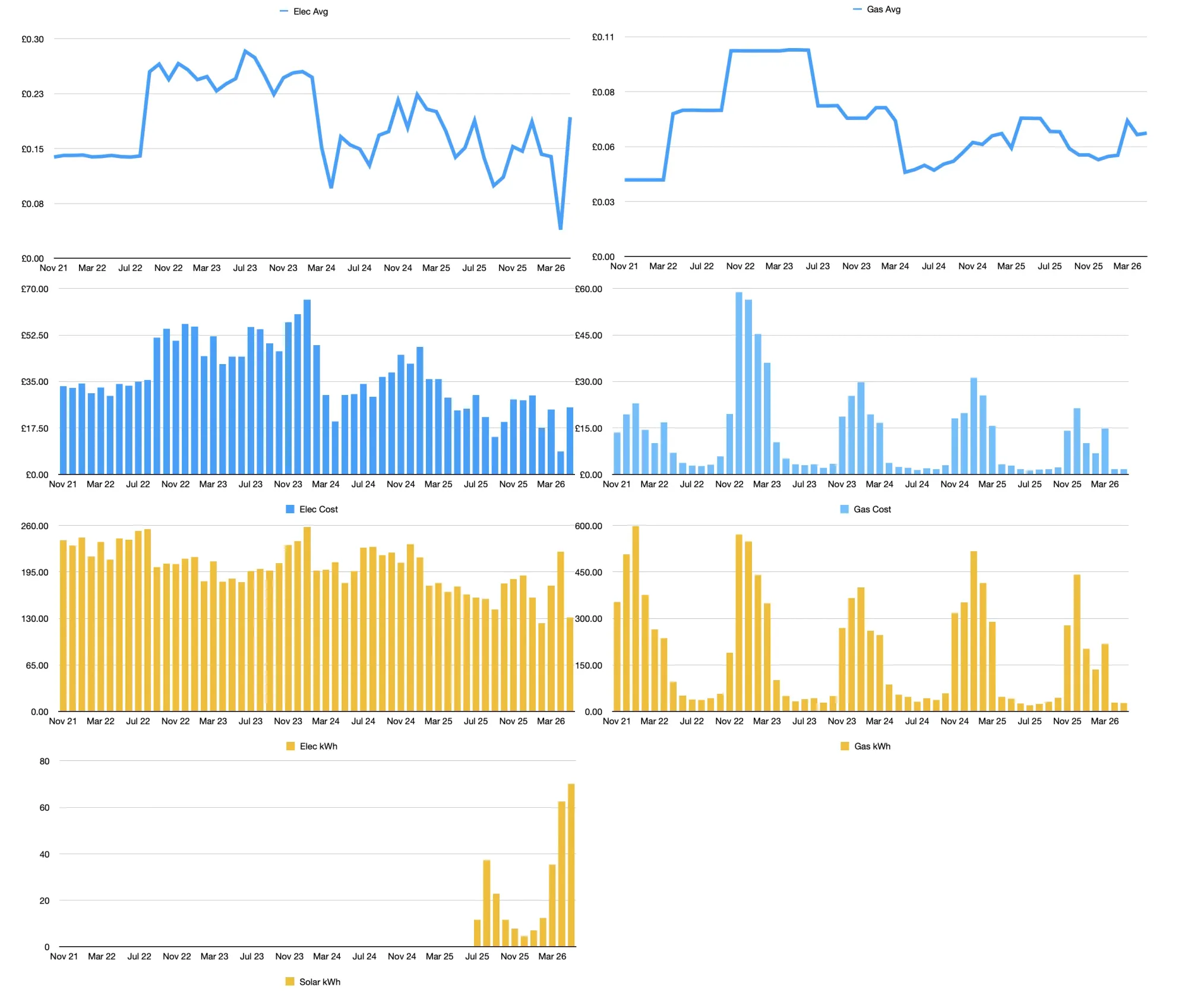
Five years of monthly electricity and gas bills laid out side by side: pre-war calm, the Ukraine spike, the partial rebound, and what installing solar + battery + Octopus Agile did to the line ever since.
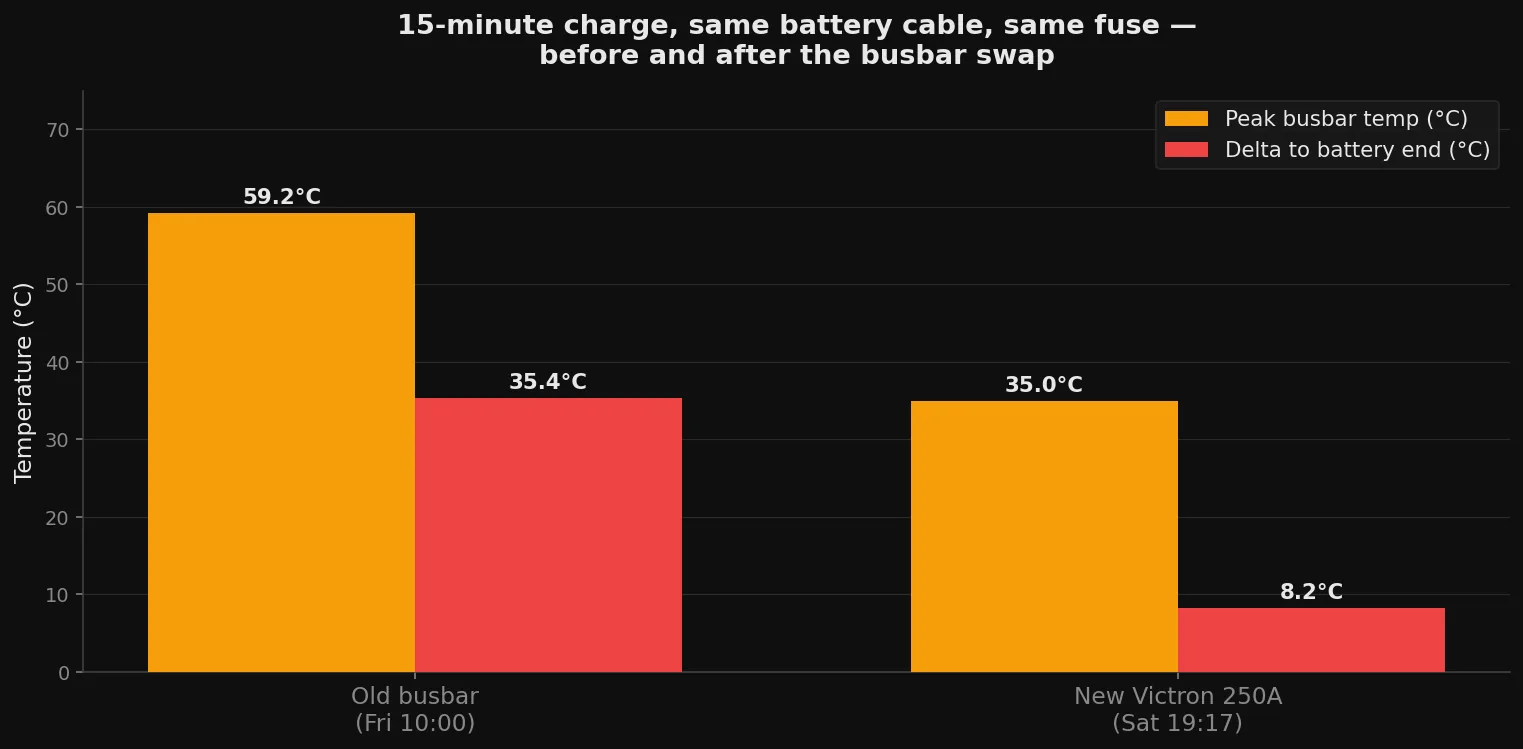
I swapped my undersized £12 Amazon battery busbar for a pair of Victron 250A 6P bars after temperature sensors flagged 76°C peaks. The busbar end now runs 24°C cooler under the same load. Better data made a better decision possible — instrument the wire, not just the cells.

Live ROI tracker for my solar + battery setup: actual Agile spend vs what the Ofgem price cap would have cost, updated every 2 hours.
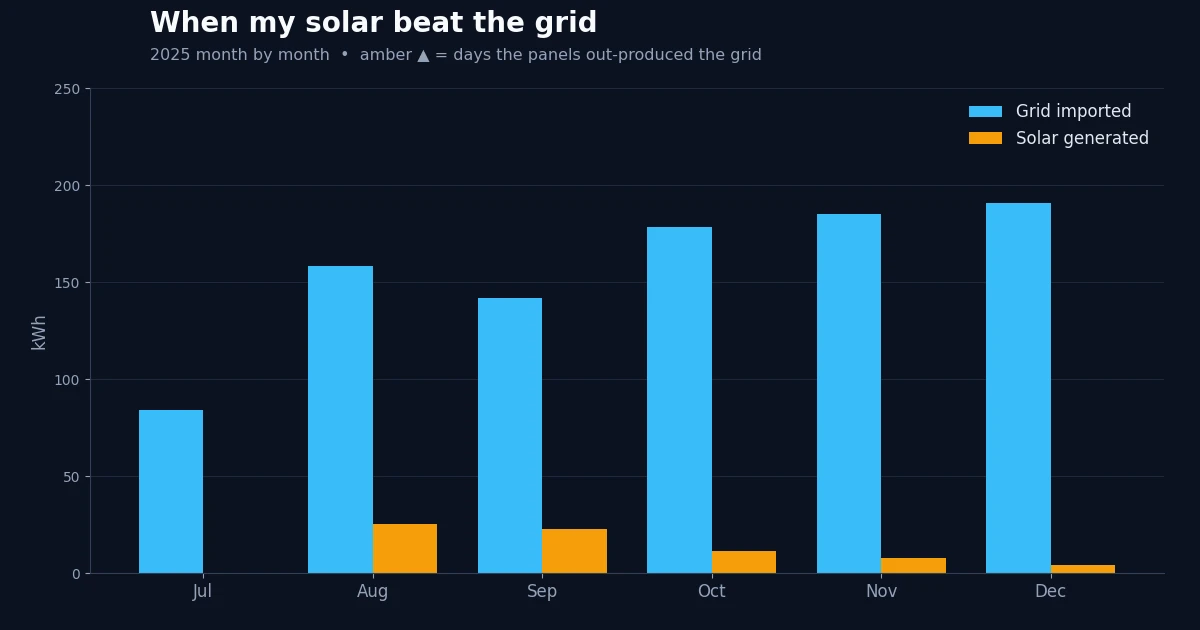
In 2025, not once did my garden panels beat the grid — the honest baseline, month by month, before the year that changed it.