 elyob
elyob

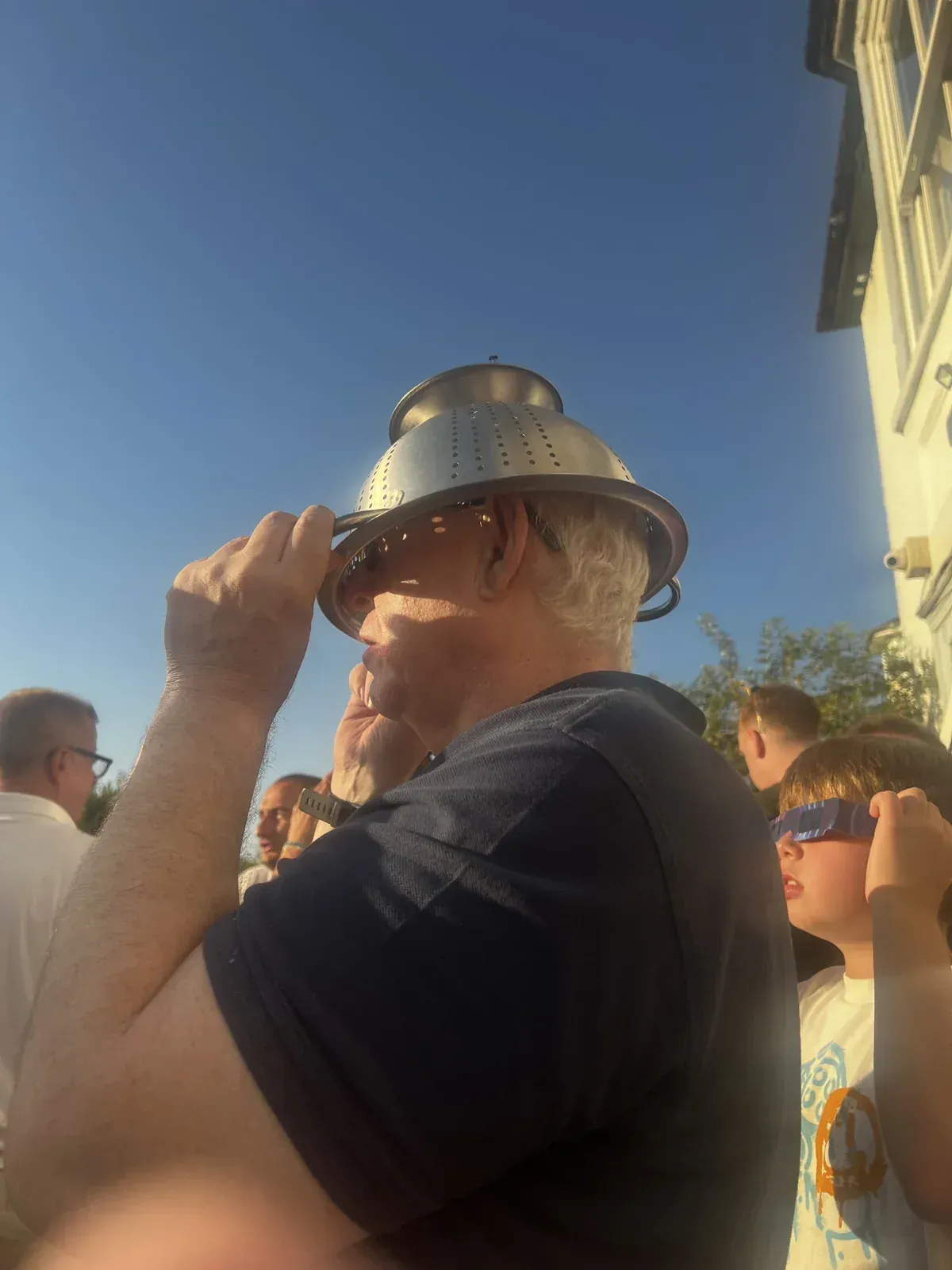
From London this was no minor nibble. The partial eclipse covered about 90% of the Sun at its peak — the biggest the UK has seen since 1999 — running from 18:17, maximum at 19:12, and ending at 20:06 BST. And my solar panels? They barely noticed.
The day made its usual 3.24 kWh, and even at maximum the output sat only about 16% under the same minute last night — nothing like the 90% the sky lost. The reason is the hour: by 7pm the low western sun no longer strikes my ground-level array directly, so the panels were running on diffuse skylight. A covered disc barely dims that.
The eclipse’s real signature was in the charge controller. Every other night it runs in ‘bulk’ straight through to about 20:10, then switches off once. Tonight it shut down at 19:05 — the dimming sky tipped the already-low panels below its threshold — sat out the maximum in the dark, then restarted at 19:43 with a fresh start-up and a second bulk, before real sunset closed it at 20:13.
For all the ceremony, the second dawn collected nothing. The yield counter had frozen at 3,240 Wh by 18:35 — the day’s harvest already done, half an hour before the eclipse peaked — and never moved again, straight through the restart. Just enough returning light to power the controller back up and run its own electronics, never a watt-hour to spare for the battery.
So the largest eclipse in a generation left no mark on my kilowatt-hours at all. It showed up instead as a false dusk and a bonus dawn — a small controller, running on scraps of scattered light, briefly certain that night had come, and then gone again.
I was oddly pleased to see it flicker back on all the same — a little machine catching a second wind it couldn’t quite use.